

PHOTO CREDIT: Mayo Clinic
News, Continued
-
The Broad Institute Receives an Additional $20M to Support the Gerstner Center for Cancer Diagnostics
November 13, 2023
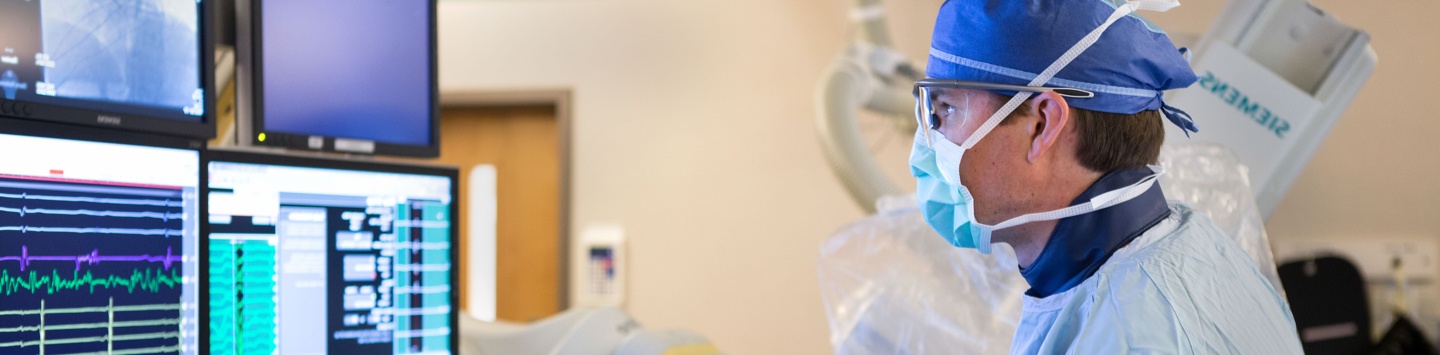
Gerstner Philanthropies has committed an additional $20 million to the Gerstner Center for Cancer Diagnostics at the Broad Institute. This commitment will support the development and optimization of liquid biopsy technology to enable more precise cancer care for millions worldwide. Directed by Dr. Viktor Adalsteinsson, this technology allows physicians to detect cancer cells and cancer recurrence, earlier than ever before. “We always knew that detecting cancer recurrence with a blood test would be an incredible feat, and the scientists in the Gerstner Center have risen to the challenge," said Todd Golub, director of the Broad Institute. This development for early detection is key to measuring patients’ response and assessing treatment options. “I first partnered with the Broad to launch the Gerstner Center in order to impact clinical care for cancer patients, and I’ve been pleased to see that Viktor and his team have created an engine of innovation that could transform not only cancer treatment but possibly other fields as well,” said Gerstner.
Read More at Broadinstitute.org
-
Brilla Charter Schools Network Unveils Louis V. Gerstner III Seton Teaching Fellows House
 November 1, 2023
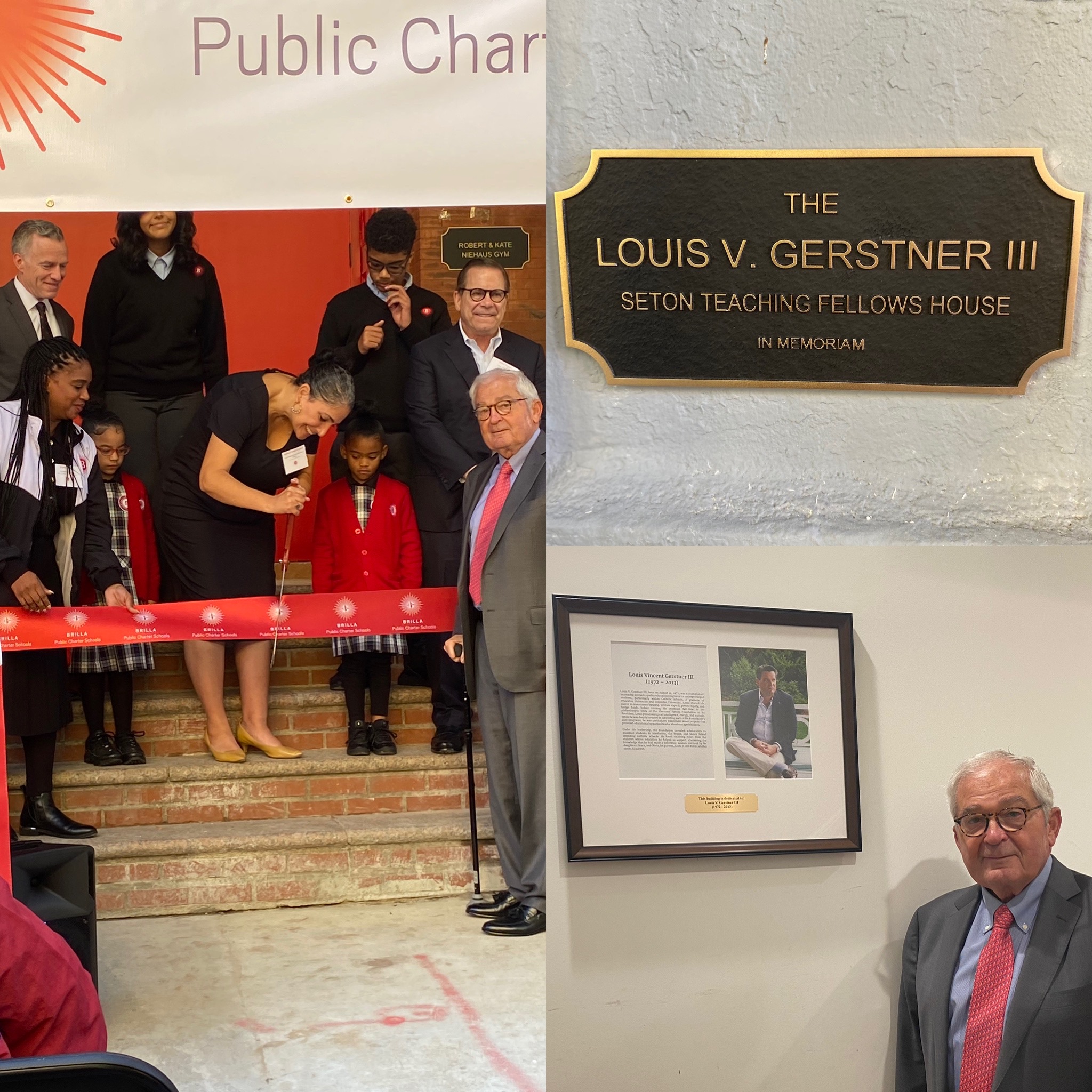
On Thursday, October 26, 2023, Brilla Public Charter Schools and their Charter Management Organization, Seton Education Partners, held a ribbon-cutting ceremony to commemorate the opening of the Louis V. Gerstner III Seton Teaching Fellows House in the South Bronx. The Seton Teaching Fellows program is a one to two-year mission opportunity for recent college graduates to serve children in underserved communities in both the classroom, as teacher aides, and by running El Camino, Seton’s after-school faith formation program. The building was named in honor of Louis V. Gerstner III, the late son of Louis V. Gerstner, Jr. and former President of the Gerstner Family Foundation, who was a life-long champion of opportunities to pursue a high-quality education for under-privileged children. In addition to the Seton Teaching Fellows House, Brilla unveiled a newly renovated gym for the students of Brilla College Prep, and dedicated network offices for the organization. Support for the renovations came from Gerstner Philanthropies, the W. E. Simon Foundation and the Robert and Kate Niehaus Foundation.
Read more about Louis V. Gerstner IIIRead more about Brilla Public Charter Schools
-
GSK Awards 2023 Chairman’s Prize
 August 16, 2023
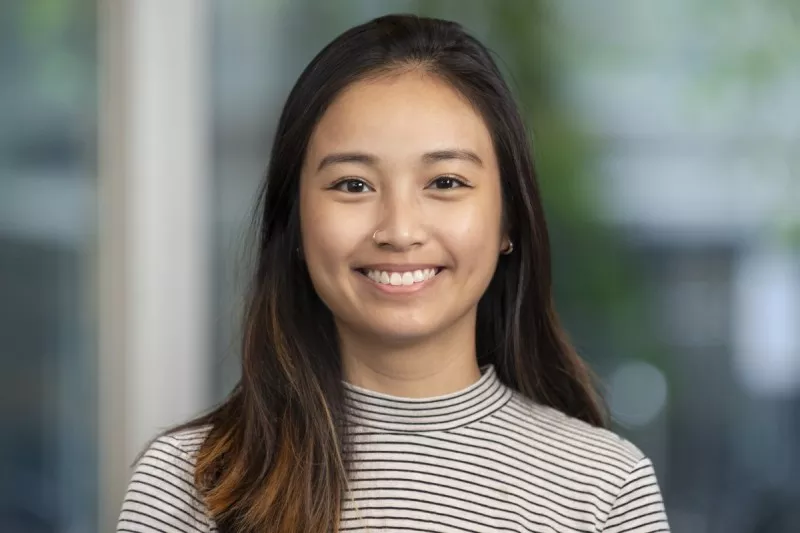
Chi Nguyen, a PhD student attending the Gerstner Sloan Kettering Graduate School of Biomedical Sciences (GSK), has been awarded the 2023 Chairman’s Prize. The $2,000 prize recognizes Nguyen's research on interactions between environmental factors, gut microbiota, and the immune system in acute graft-versus-host disease following allogeneic hematopoietic cell transplantation (allo-HCT). “Microbiota” refers to the fungi, bacteria and viruses that live in the intestines and play a pivotal role in regulating the immune system. Little is known about how different medications can impact this microbiota. Nguyen’s research aims to give physicians a better understanding of how they can protect the gut health of patients with cancer while they are undergoing treatment. Nguyen conducted her research under the mentorship of Marcel van den Brink, MD, PhD, Head of the Division of Hematologic Malignancies, who also has a lab in the Immunology Program at the Sloan Kettering Institute (SKI). Of her research, Dr. van den Brink shared: “Chi was very brave to engage in this project, which was purely computational biology. Her background in this field was limited when she joined my lab. Therefore, I am even more proud of her accomplishments.” Nguyen was born and raised in Hanoi, Vietnam, and moved to the United States to attend Colgate University in Hamilton, New York. In 2018, after graduation, she moved to New York City to pursue graduate school with an eye on cancer research. “My parents have always inspired a sense of curiosity in me,” says Nguyen. “Curiosity about the natural world, biology, and how things work.”
Read More at MSKCC.org
-
Mayo Clinic Names 2023 Recipients of Gerstner Family Career Development Awards
August 2, 2023
The Mayo Clinic has announced the 2023 recipients of the Gerstner Family Career Development Awards. These awards are presented annually to researchers conducting innovative investigations to predict, prevent, treat, and cure diseases using individualized medicine approaches. This year, physician scientist Patrizia Mondello, M.D.,Ph.D., M.Sc., and medical oncologist Ryan Carr, M.D., Ph.D., have been selected to further develop their research in treating follicular lymphoma and pancreatic cancer resistance, respectively. For these studies, both of which aim to improve the outcomes for patients facing resistant forms of cancer, securing funding in these earliest stages is crucial.
Read More At: MayoClinic.org
-
WSJ OP-ED: Stop Homelessness Before It Starts
June 30, 2023
In a recent OP-ED published by the Wall Street Journal, Gerstner Philanthropies founder and Chairman, Louis. V. Gerstner, Jr., highlights the important role one-time emergency financial assistance can play in preventing homelessness. "Shelter services for a family in New York City cost $191 a day, or nearly $70,000 a year, according to the mayor’s office. That adds up to a total annual cost of $1.2 billion," Gerstner writes. "The best way to help is by preventing homelessness in the first place. Gerstner Philanthropies has spent more than $36 million on a program called Helping Hands. It provides small amounts of money to help otherwise stable people overcome short-term emergencies and stay out of shelters."
Read more at wsj.com